

Pacing of Story Definition

Storytelling is not only about what happens in a narrative but also how fast or slow it unfolds. Many writers focus heavily on plot, characters, or dialogue, yet overlook one of the most powerful tools in storytelling: pacing of story. Pacing determines whether a reader feels excited, emotionally invested, relaxed, or bored. A perfectly paced story keeps readers turning pages, while poor pacing can cause even a great idea to fail Pacing of Story Definition.
In this in-depth guide, you will learn the true meaning of pacing of a story, why it matters, its different types, real examples, common mistakes, and practical techniques to improve it. Whether you are a beginner writer, a creative writing student, or an experienced author, mastering pacing can dramatically improve your storytelling skills.
Table of Contents
Table of Contents
What Is Pacing of Story?
Pacing of story refers to the speed at which events unfold in a narrative. It controls how quickly or slowly information, action, emotions, and plot developments are revealed to the reader. Good pacing creates a rhythm that matches the mood and purpose of each scene Pacing of Story Definition.
In simple terms, pacing answers this question:
How fast does the story move, and does that speed feel right?
A chase scene usually requires fast pacing, while a reflective moment between characters may need slower pacing. Skilled writers adjust pacing throughout a story to maintain balance and engagement.
Why Pacing of Story Is So Important
Pacing is one of the main reasons readers stay engaged or lose interest. Even strong characters and clever dialogue cannot save a story if its pacing feels wrong.
Here are the key reasons why pacing of story matters:
Maintains Reader Engagement
When pacing is well controlled, readers feel emotionally connected and motivated to continue reading. They do not feel rushed or bored.
Controls Emotional Impact
Fast pacing builds excitement and tension, while slow pacing allows emotions to sink in. Effective pacing helps readers feel what the characters feel.
Supports Plot Development
Pacing determines how and when key plot points are revealed. Proper timing can make twists more shocking and resolutions more satisfying Pacing of Story Definition.
Enhances Story Flow
A well-paced story feels smooth and natural. Transitions between scenes feel purposeful rather than confusing or abrupt Pacing of Story Definition.
Understanding Narrative Pacing
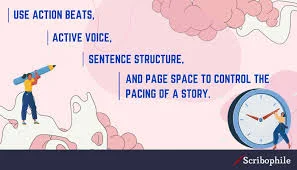
Narrative pacing is the broader concept that includes sentence structure, scene length, dialogue, description, and chapter organization. Every element of writing contributes to the pacing of story.
For example:
- Short sentences increase speed.
- Long descriptive paragraphs slow the pace.
- Dialogue usually speeds up a scene.
- Internal monologue slows it down.
Great writers consciously manipulate these elements to guide the reader’s experience.
Types of Pacing of Story
Different moments in a story require different pacing. Understanding these types helps writers decide how fast or slow a scene should be Pacing of Story Definition.
Fast Pacing
Fast pacing moves quickly and creates urgency. It is often used during: Pacing of Story Definition
- Action scenes
- Chase sequences
- Arguments or conflicts
- Climactic moments
Characteristics of fast pacing:
- Short sentences and paragraphs
- Limited description
- Rapid dialogue
- Immediate actions
Fast pacing keeps the reader on edge and heightens excitement. However, using it too often can exhaust readers and reduce emotional depth.
Slow Pacing
Slow pacing allows the story to breathe. It is commonly used for Pacing of Story Definition:
- Character development
- Emotional reflection
- World-building
- Relationship building
Characteristics of slow pacing:
- Longer sentences
- Detailed descriptions
- Internal thoughts
- Fewer major events
Slow pacing helps readers connect with characters and understand motivations. When overused, however, it can make the story feel dull or stagnant.
Balanced Pacing
The most effective stories use a mix of fast and slow pacing. Balanced pacing ensures that intense scenes are followed by quieter moments, allowing readers to process what happened.
Strong pacing of story is not about constant speed but about intentional variation.
Pacing of Story in Different Genres
Pacing expectations vary by genre. Understanding these differences helps writers meet reader expectations Pacing of Story Definition.
Fiction and Literary Novels
These often feature slower pacing with a focus on character psychology, themes, and symbolism.
Thrillers and Action Stories
Fast pacing dominates, especially during major plot points. Short chapters and cliffhangers are common.
Romance
Pacing alternates between emotional slow moments and faster plot developments Pacing of Story Definition.
Fantasy and Science Fiction
World-building slows pacing early on, while later sections may accelerate during conflicts or battles.
Short Stories
Because of limited length, pacing of story must be tight and efficient, with minimal unnecessary detail.

Examples of Good and Bad Pacing of Story
Example of Good Pacing
A mystery novel introduces a crime quickly, then slows down to explore clues and suspects. As the story approaches the reveal, pacing accelerates again. This rhythm keeps readers engaged without overwhelming them Pacing of Story Definition.
Example of Bad Pacing
A story spends chapters describing a setting before anything happens, causing reader boredom. Later, major events are rushed in a few pages, reducing emotional impact. This imbalance weakens pacing of story Pacing of Story Definition.
Techniques to Improve Pacing of Story
Improving pacing is a skill that can be learned with practice and awareness. Below are proven techniques writers use to control pacing effectively.
Control Sentence Length
Sentence length has a powerful effect on pacing.
- Short sentences = fast pacing
- Long sentences = slow pacing
Mixing both creates rhythm and variety Pacing of Story Definition.
Use Dialogue Strategically
Dialogue naturally speeds up pacing because it breaks up paragraphs and focuses on immediate interaction. Use it to energize scenes and reduce long blocks of description.
Manage Scene Length
Short scenes increase momentum. Longer scenes allow for depth. Decide scene length based on the emotional goal of the moment.
Limit Unnecessary Description
Description is important, but excessive detail can slow pacing of story unnecessarily. Focus on details that serve character, mood, or plot.
Vary Chapter Endings
Ending chapters with tension or unanswered questions encourages readers to continue. Calm endings slow pacing and provide rest.
Show, Don’t Over-Explain
Trust the reader. Over-explaining thoughts or actions slows pacing and reduces engagement.
Pacing of Story Through Editing
Pacing is often improved during revision rather than the first draft. When editing, ask yourself:
- Does this scene move the story forward?
- Can this paragraph be shortened?
- Is this emotional beat necessary here?
Cutting or tightening scenes is one of the most effective ways to improve pacing of a story Pacing of Story Definition.

Common Mistakes in Story Pacing
Even experienced writers struggle with pacing. Here are common mistakes to avoid:
Overloading the Beginning
Too much background information early on slows pacing and risks losing readers.
Rushing the Climax
Major events need space to feel impactful. Rushing them weakens emotional payoff Pacing of Story Definition.
Repetitive Scenes
Repeating similar actions or emotions stalls progress and disrupts pacing of story.
Ignoring Transitions
Abrupt scene changes without context confuse readers and damage flow Pacing of Story Definition.
Pacing of Story for Beginner Writers
If you are new to writing, pacing can feel overwhelming. Start with these simple tips:
- Read your work aloud to hear rhythm
- Compare fast and slow scenes
- Study pacing in books you enjoy
- Practice writing the same scene at different speeds
With time, pacing becomes intuitive Pacing of Story Definition.
How Readers Perceive Pacing
Readers may not consciously identify pacing issues, but they feel them. Signs of poor pacing include:
- Skimming paragraphs
- Feeling bored or confused
- Losing emotional connection
Strong pacing of the story makes readers forget they are reading and fully immerse themselves in the narrative.
The Relationship Between Plot and Pacing
Plot and pacing are closely connected but not the same. Plot is what happens; pacing is how fast it happens. A simple plot can be compelling with good pacing, while a complex plot can fail with poor pacing.
Pacing of Story in Modern Storytelling
Modern audiences often prefer tighter pacing due to digital media habits. Shorter chapters, faster openings, and engaging hooks are increasingly common. However, emotional depth still requires slower moments.
Successful writers adapt pacing without sacrificing quality.
Final Thoughts on Pacing of Story
Mastering pacing of a story is one of the most valuable skills a writer can develop. It transforms ideas into engaging narratives and keeps readers emotionally invested from beginning to end. By understanding pacing, analyzing examples, and applying practical techniques, you can dramatically improve your storytelling.
Pacing is not about speed alone—it is about control, balance, and intention. When done right, readers will not notice pacing at all; they will simply feel compelled to keep reading.